Paper
Suisheng Zhao (Professor and Director of the Center for China-US Cooperation at the Korbel School of Global and Public Affairs, University of Denver) argues that anti-Asian and anti-Chinese American racism has intensified along with the militarized U.S.-China rivalry that has escalated in the past decade, particularly since President Trump launched a trade war against China in 2018.
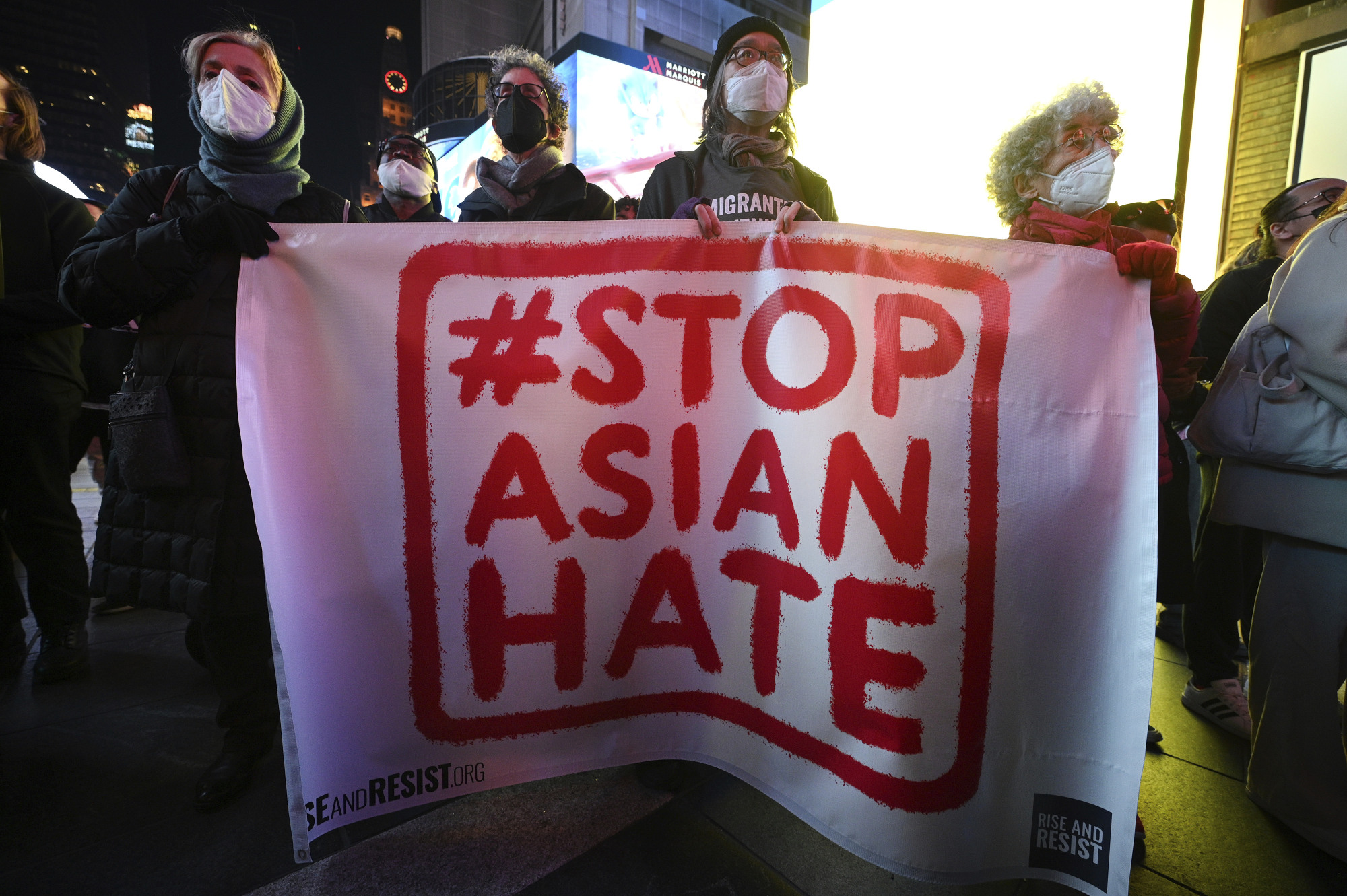
People hold a "stop asian hate" sign as they attend a Justice for Asian Women Rally in Times Square, New York, NY, March 16, 2022. (Photo by Anthony Behar/Sipa USA via AP Images)
Within the United States, the militarized U.S.-China rivalry has fueled anti-Asian racism, particularly towards Chinese Americans. In the past five years, there has been a rise in hate crimes against Asian Americans. Chinese American scholars and students have been targeted as potential spies because of their heritage, and in some U.S. states, Chinese nationals and Chinese Americans have been excluded from purchasing land and homes. This discrimination goes against the U.S. values of human rights and equality for all. Strategically, it contributes to the U.S. losing the international talent competition and harms U.S. economic interests.