Paper
The Costs of War Project has created this resource that compiles our past research to provide an overview of the costs of the U.S. post-9/11 wars. The “post-9/11 wars” refers to United States-led military operations and other government programs around the world that grew out of President George W. Bush's "Global War on Terror," starting with the U.S. invasion of Afghanistan in 2001.
The Budgetary Cost
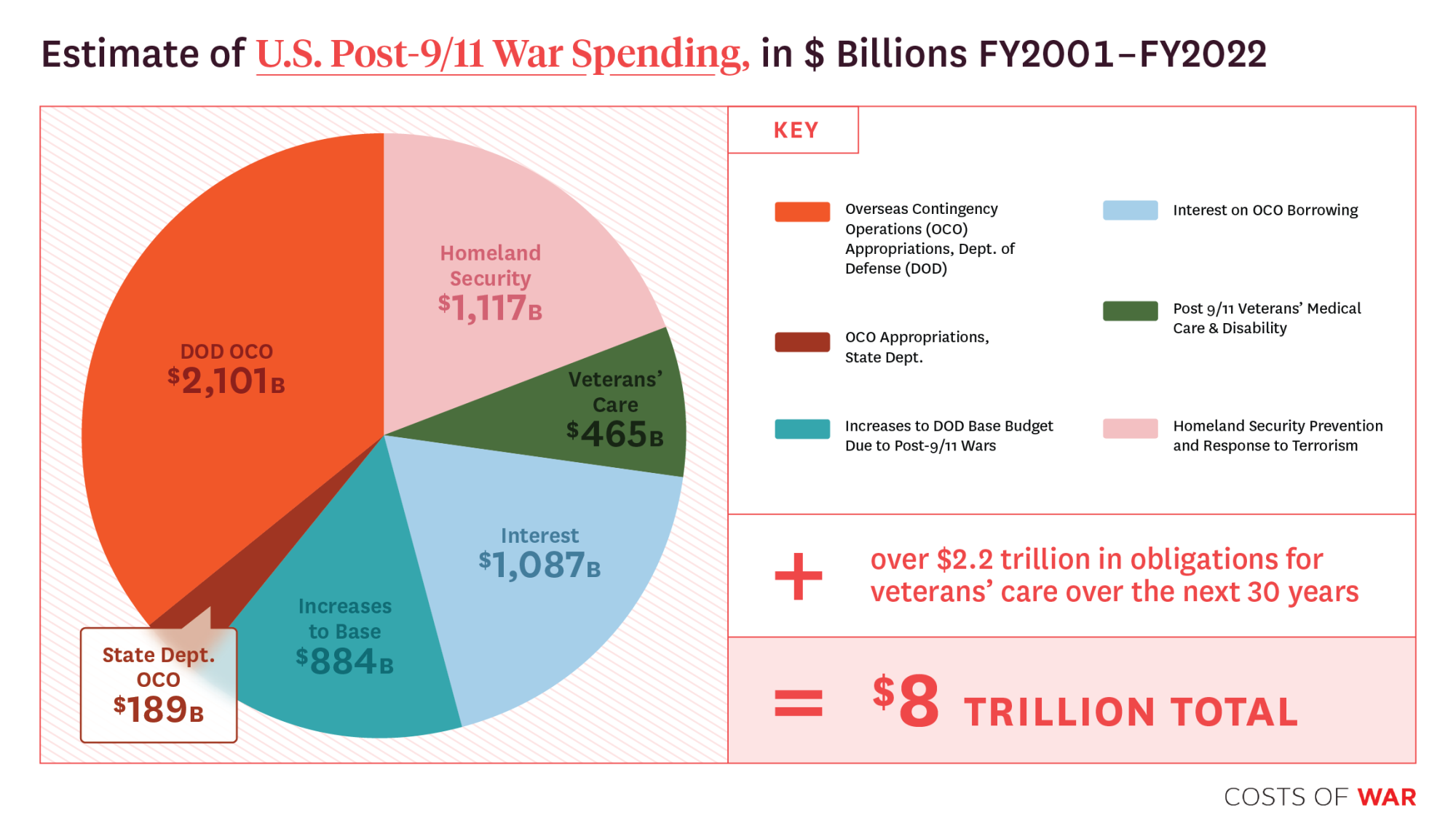
Post-9/11 wars have been extremely costly. Through 2021, the U.S. federal government spent or was obligated to spend more than $8 trillion on the post-9/11 wars. These are “credit card wars” that have largely been financed through borrowing.
The opportunity costs are staggering. Many of these funds could have been spent on public health or in sectors that create far more jobs than the defense sector, like education or green energy.
The Human Cost
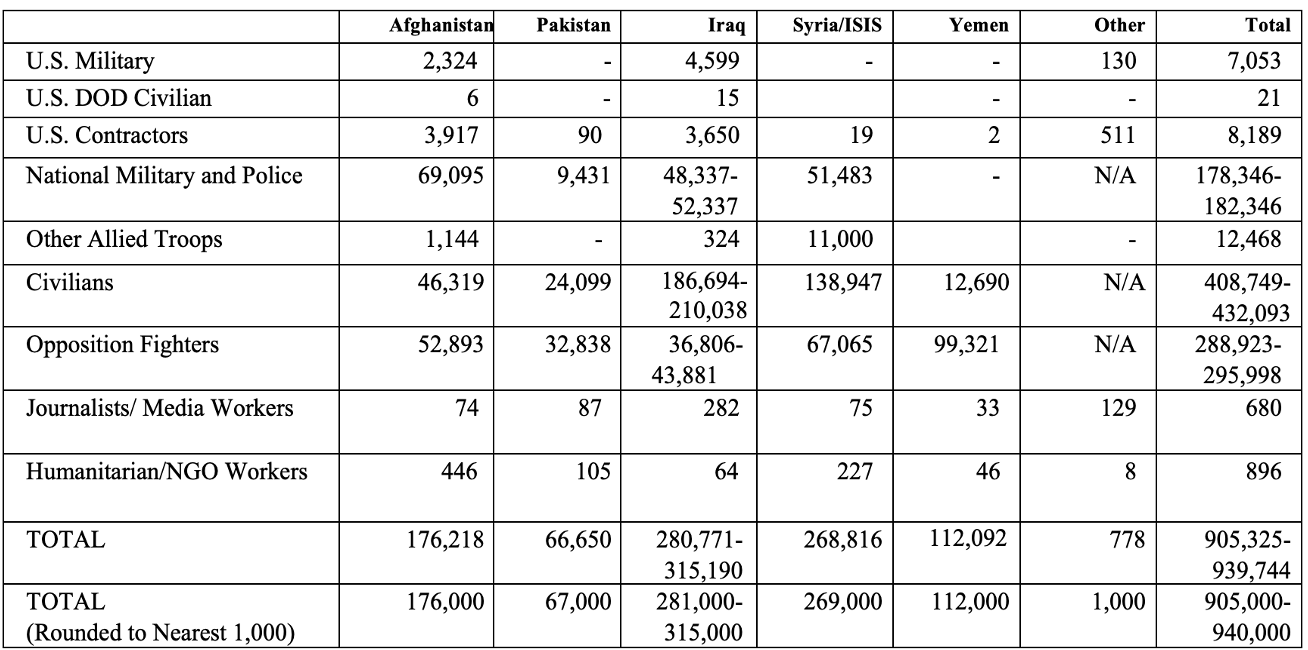
The body count continues to grow. As of 2023, an estimated 905,000 - 940,000 people – including U.S. soldiers, allied security forces, civilians, and militants – have died due to war violence in Iraq, Afghanistan, Pakistan, Syria (in the fight against the Islamic State), Yemen, and elsewhere. At least 408,749 - 432,093 of those who have died were civilians.
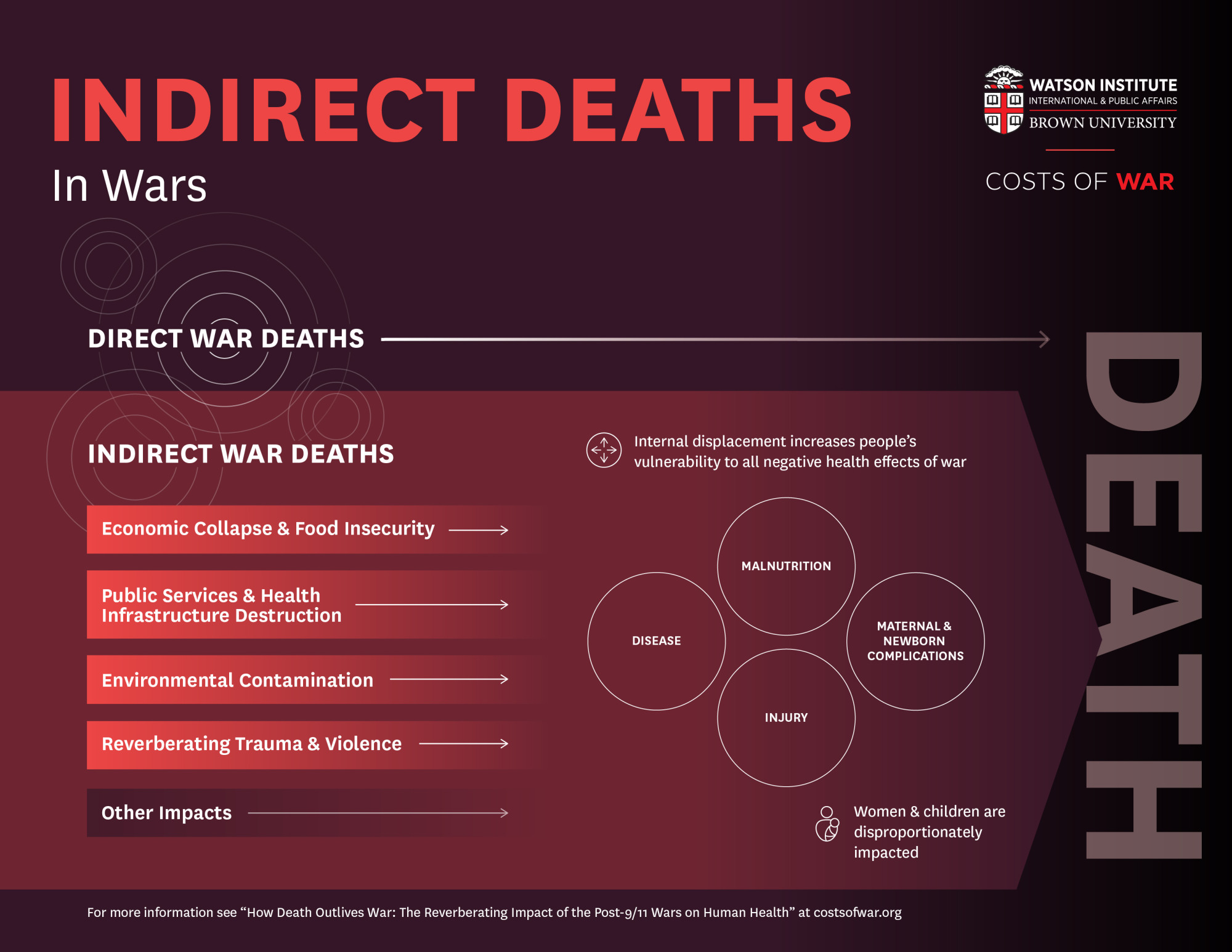
Many other people have died indirectly as a result of the wars. An estimated 3.6-3.8 million indirect deaths have occurred in post-9/11 war zones, including in Afghanistan, Pakistan, Iraq, Syria, and Yemen, as of 2023. The total death toll in these war zones could be at least 4.5-4.7 million and counting, though the precise mortality figure remains unknown. Some people were killed in the fighting, but far more, especially children, have been killed by the reverberating effects of war, such as the spread of disease and malnutrition.
The Environmental Cost
The U.S. Department of Defense is the world’s single largest institutional consumer of oil – and as a result, one of the world’s top greenhouse gas emitters. It emits more greenhouse gases than whole countries, like Morocco and Switzerland. The post 9/11 wars are thus key contributors to climate change.
The Expanding Scope
The United States has post-9/11 military operations and programs run out of civilian departments for military purposes in at least 78 countries, as of 2023. Under the auspices of counterterrorism, U.S. operations stretched not only to Afghanistan, Iraq, and Syria, but also to Pakistan, the Philippines, Somalia, Mali, and many more countries than most Americans realize.
.png)
About Us
The Costs of War Project, housed at Brown University’s Watson School, was launched by a group of scholars and experts to document the many costs of the post-9/11 wars in Afghanistan, Iraq, and elsewhere. Please see www.costsofwar.org and reach out to us at costsofwar@brown.edu.